Equipment Finance Insight
Maximizing Benefits with section 179 for Your Forklift Fleet
A timely update in 2026
>> Download PDF <<
Hello, world
Hello, world
TONYA FRY is an owner and Vice President at Harry Fry & Associates. Tonya has 22 years of experience in the heavy equipment finance industry. Tonya brings a strategic and customer-focused approach to equipment financing. She works closely with clients throughout the funding process, helping businesses secure customized financing solutions that support growth, improve cash flow, and maximize profitability. Harry Fry & Associates is a family-owned company specializing in crane and heavy-equipment financing solutions. They have secured approximately $1.7 billion in financing over the past thirty years.
DAN MCDONOUGH is the founder, CEO and president of Commercial Credit Group (CCG). He has 40 years of experience in the construction and transportation equipment financing markets and has been instrumental in growing CCG’s crane portfolio. Commercial Credit Group is an independent equipment finance provider based in Charlotte, NC, specializing in financing for new and used equipment, equipment refinancing and working capital loans. In 22 years, CCG has financed over $500 million in cranes for companies across the U.S. and Canada.
JEFF WHITCOMB is SVP for Construction and Industrial at First Financial Equipment Leasing, a JA Mitsui company. He has 28 years of experience in the construction and transportation equipment financing markets and has been instrumental in adding $230 million in new originations in the past three years. As part of the JA Mitsui Leasing family, First Financial Equipment Leasing offers the stability and resources of a global powerhouse with over $16 billion in assets.
> Download Article PDF <<Hello, world
Automation in 2026 is not just evolving; it is accelerating at a pace that challenges most businesses to keep up with traditional capital budgets. At MODEX this year, you will witness firsthand how AI-native automation, robotics, and warehouse orchestration tools are transforming operations. Innovations like generative AI co-pilots and predictive analytics are becoming central to automation strategies, but the real story lies in the data.
In this environment of rapid innovation, rising expectations, and intensifying competitive pressure, more companies are opting for leasing.
Stay Ahead of Rapid Innovation: With AI-driven systems evolving monthly, rather than yearly, leasing allows you to stay ahead of technology without locking yourself into quickly outdated systems.
Preserve Cash While Automating Aggressively: Automation requires significant capital investment. Leasing enables you to smooth your cash flow, allowing reinvestment in hiring, inventory, expansion, or logistics resilience, key focus areas at MODEX 2026.
Bundle Everything into One Payment: Today’s automation encompasses:
Leasing allows you to finance hardware, software, and services as a single, unified operational expense.
Support Phased Automation Strategies: Currently, only 10% of warehouses employ advanced automation, but 31% plan to be fully automated by 2028. Leasing enables phased expansion without financial friction.
Accelerate Deployment: MODEX will feature over 1,000 technology providers and demonstrations that illustrate the rapid advancement of automation. Flexible financing helps you move from “demo to done” more quickly.
Bottom Line: Automation is becoming smarter, faster, and increasingly essential for competitiveness. Financing needs to keep pace with these advancements.
Leasing offers companies the agility to adopt cutting-edge automation, frequently upgrade their systems, preserve cash, and scale on demand, all while staying ahead of accelerating technology cycles.
If you are planning automation investments in 2026, leasing may be the most strategic move you can make. Contact us today to discuss a customized financing plan that will advance your automation roadmap for 2026 and beyond.
David Sanborne, Senior Vice President, National Sales Manager, M: (480) 363-7554, E: dsanborne@ffequipmentleasing.comHello, world

*** Click to read article on techronicler.com ***
Frank Sommers, Vice President, Technology Leasing, at First Financial Equipment Leasing, brings 30 years of experience in the IT leasing industry, advising global enterprise organizations on how to modernize their infrastructure while preserving capital and accelerating technology adoption. A former collegiate soccer player at Cal Poly San Luis Obispo, Frank brings a strong sense of competitiveness and teamwork to every client relationship.
As AI adoption moves quickly across industries, large enterprises are facing significant financial hurdles, with full-scale AI data center investments ranging from $150 to $500 million. Frank joins us today to explain how organizations can overcome these barriers. He discusses how IT leasing acts as a “budget multiplier,” allowing companies to bypass the massive upfront costs of high-performance compute infrastructure and avoid the trap of rapidly depreciating technology.
Frank Sommers:
Large enterprises face several significant challenges when modernizing for AI. First, the core infrastructure is expensive and highly concentrated, particularly GPUs which are essential for processing AI workloads. For a full-scale AI deployment, organizations may need to invest hundreds of thousands to millions per GPU cluster, resulting in total data center investments ranging from $150 to $500 million.
The financial hurdle is especially steep for mid-tier enterprises. Many lack the balance sheet strength to secure traditional credit for these large expenditures. As a result, they often turn to private equity or high-interest lenders, or in some cases are forced to pay cash up front. Even when organizations can afford these purchases, many IT leaders are frustrated in trying to keep pace with AI evolution as the technology can become obsolete before it’s fully deployed.
Frank Sommers:
Leasing offers two major advantages that can ease and accelerate AI adoption:
Minimizing upfront costs: Traditional purchasing requires a large cash outlay, which often forces organizations to scale back roll outs even when they need more capacity. Leasing eliminates this barrier by converting a massive one-time upfront expense into manageable monthly payments, freeing up budget for additional needs. For example, instead of spending $50 million upfront, a company could lease the same equipment for a predictable monthly expense, enabling more projects to move forward simultaneously.
Enhancing flexibility and reducing financial risk: When organizations purchase technology, it goes on their balance sheet and depreciates over a set period. If the business needs to change or upgrade the technology before full depreciation, it can result in significant book losses. Alternatively, leasing categorizes the equipment as an operating expense, keeping it off the balance sheet and allowing companies to get in and out of technology quickly without the burden of depreciation or potential financial loss.
Ability to bundle software, security and maintenance: Leasing allows organizations to address AI requirements that go beyond infrastructure – by bundling associated software, maintenance, and security costs into a single package.
Based on these advantages, leasing allows organizations to adopt AI faster by lowering financial barriers, maintaining flexibility, and mitigating risks associated with asset ownership.
Frank Sommers:
The largest category we’re seeing is high-performance compute infrastructure, particularly GPU-based servers designed to handle AI and machine learning workloads. Unlike traditional CPU-based servers, GPUs are optimized for the intense processing demands of AI model training and inference.
Beyond compute, organizations are leasing the full AI technology stack, including: Networking equipment to support high-speed data transfer; enterprise storage systems, often integrated directly into the server environment; data center infrastructure, including fully configured “rack and roll” solutions; security components such as firewalls; and AI-specific and enterprise software that runs on top of the hardware.
Frank Sommers:
Leasing gives organizations flexibility and helps them stay proactive in managing technology lifecycles. Instead of committing to five years of ownership, a three- or four-year lease encourages regular review of what’s in use. At the end of the term, companies can decide to extend the lease, buy out the equipment, or return it and upgrade to newer technology.
This approach prevents the “set it and forget it” mindset that often happens with technology ownership, where equipment ages silently until a critical failure or performance gap forces costly, reactive decisions. In the AI and data center space, this can easily triple costs. Leasing ensures companies remain agile, continuously optimizing their infrastructure and aligning with the latest technology advancements without over-investing or falling behind.
Frank Sommers:
Leasing allows organizations to bundle all associated software, maintenance, and security costs into a single package. This includes embedded software, add-on applications, and ongoing maintenance contracts.
Hardware and infrastructure is treated with a residual value, typically 10–15% below its purchase cost, spread over the lease term.
All “soft costs” such as software licenses, maintenance and other services are included in the lease payments and automatically expire at the end of the term, since software licenses can’t be resold.
Clients only assume responsibility for the hardware at lease end, simplifying compliance and ensuring that security-related updates, patches and licenses remain current throughout the lease.
By bundling hardware and software this way, IT leaders can reduce administrative overhead, ensure compliance with licensing requirements, and keeps security measures up to date – side stepping the risk of aging, insecure and unsupported systems.
Frank Sommers:
AI technologies are evolving rapidly, and no one can predict what the landscape will look like in three years. Leasing infrastructure allows organizations to adapt, upgrade, or pivot as business needs change. Owning large amounts of rapidly depreciating technology can leave companies stuck with outdated assets that no longer align with their strategy.
Leaders must also account for the full lifecycle cost of AI infrastructure. Equipment refresh, secure data wiping, asset disposition, and compliance requirements all carry operational and financial burdens. When organizations own the equipment outright, those responsibilities and costs fall entirely on them, and they can be significant.
The most important priority for IT leaders right now is developing a strategy that enables AI adoption with the least possible upfront cost, and which offers maximum flexibility. AI initiatives can be capital intensive, and if organizations commit the bulk of their budget to a single large purchase, they risk not having the funding for other critical projects.
Instead of paying cash and quickly exhausting a $10 or $50 million IT budget, leaders should think of IT leasing as a budget multiplier. For example, rather than spending $10 million upfront, that same capital can be allocated toward predictable monthly lease payments. By doing so, organizations can realize greater total project value while preserving liquidity and maintaining momentum across the broader IT roadmap.
“Instead of paying cash and quickly exhausting a $10 or $50 million IT budget, leaders should think of IT leasing as a budget multiplier.”
That powerful advice from Frank Sommers fundamentally shifts how we should think about enterprise AI strategy. As we discussed, the operational and financial burdens of equipment refresh, secure data wiping, and asset disposition can be significant when organizations own their equipment outright. By treating AI as an operating expense, IT leaders can maintain the flexibility to adapt and upgrade as business needs change.
A huge thank you to Frank for sharing his deep expertise in IT lifecycle management and enterprise procurement. For IT leaders planning large-scale AI adoption in 2026 and beyond, prioritizing maximum flexibility and the lowest possible upfront costs is clearly the winning playbook.
Frank Sommers brings 30 years of experience in the IT leasing industry, working closely with global enterprise organizations to help them modernize infrastructure while preserving capital and accelerating technology adoption. Known for consistently exceeding sales targets, Frank has also developed and led numerous successful vendor financing programs in partnership with major resellers, creating flexible acquisition models that support complex IT environments. His deep expertise in IT lifecycle management, financing strategies, and enterprise procurement has made him a trusted advisor across the industry. A former collegiate soccer player at Cal Poly San Luis Obispo, Frank brings the same competitiveness and teamwork to every client relationship.Hello, world
*** Click to read article on datacenterpost.com ***
AI spending is accelerating at a pace most enterprise budgets simply can’t match. While IT leaders are under pressure to deliver transformative AI capabilities, their capital budgets aren’t growing at the same rate as these AI ambitions. This mismatch is forcing difficult trade-offs: delayed projects, stretching aging infrastructure beyond its intended lifecycle, and diverting funding from other critical initiatives.
But there is another option. Increasingly, IT leaders are turning to technology leasing as a savvy strategy to help expedite AI adoption without sacrificing operational agility or financial liquidity.
From my vantage point, working closely with IT leaders across industries, I hear the lament. AI infrastructure is expensive and highly concentrated, particularly GPU-based compute power. A single GPU cluster designed to support large-scale AI workloads can cost hundreds of thousands to millions. For enterprise-wide deployments, total data center investments can easily reach $150 million and as much as $500 million.
For mid-tier enterprises, challenges are even greater, as many lack the balance-sheet strength to secure traditional credit for such large capital expenditures. Some resort to private equity or high-interest lenders. But even those who can afford to purchase the infrastructure outright are frustrated by the pace of AI innovation; and the risk of technology becoming quickly outdated or obsolete.
For determined IT leaders, the question is not whether to invest in AI infrastructure, but how to fund it without compromising the broader IT roadmap. This is where the financing strategy becomes just as important as the technology strategy.
IT leasing eases these pressures in several critical ways:
IT leaders recognize today’s AI deployments extend far beyond servers. Enterprises are leasing high-performance GPU servers optimized for AI model training and inference, along with high-speed networking equipment, enterprise storage systems, integrated “rack and roll” data center solutions, firewalls, and AI-specific software.
Maintenance contracts, security tools, and embedded applications can all be incorporated into a single lease structure.
This bundling delivers administrative and compliance benefits. Hardware typically carries a residual value often 10–15% below purchase cost, amortized across the lease term. Software licenses and other “soft costs” are included in payments and expire at term end, eliminating resale complications. Clients are responsible only for the hardware at lease completion, simplifying compliance and ensuring security updates, patches, and licenses remain current throughout the lifecycle.
One of the most common concerns I hear from executives is technology obsolescence. And given the pace of AI, where innovation cycles are measured in months, not years, that concern is justified.
Leasing naturally enforces a rigor and discipline for countering obsolescence. A three- or four-year term creates a defined decision point: extend, buy out or upgrade the technology. This prevents the “set it and forget it” ownership mindset that often leads to aging, unsupported systems and expensive, reactive refresh cycles. In AI environments, delaying upgrades can multiply total costs through inefficiencies and lost competitive advantage.
Looking ahead to 2026 and beyond, IT leaders must think differently about capital allocation. No one can predict what the AI landscape will look like in three years. Owning large volumes of rapidly depreciating infrastructure can limit strategic agility.
Leaders must also factor in the full lifecycle cost of AI infrastructure, which includes equipment refreshes, secure data wiping, asset disposition, and regulatory compliance. These factors carry operational and financial burdens when assets are owned outright.
The most important priority today is building a strategy that enables AI adoption with minimal upfront cost and maximum flexibility. Leasing can act as a budget multiplier. Instead of exhausting capital on one large acquisition, organizations can deploy that same funding across predictable monthly payments, preserving liquidity while expanding total project capacity. In doing so, IT leaders maintain momentum across their complete technology roadmap, ensuring AI transformation doesn’t come at the expense of operational resilience.
# # #
About the Author

Frank Sommers brings 30 years of experience in the IT leasing industry, working closely with global enterprise organizations to help them modernize infrastructure while preserving capital and accelerating technology adoption. Known for consistently exceeding sales targets, Frank has also developed and led numerous successful vendor financing programs in partnership with major resellers, creating flexible acquisition models that support complex IT environments. His deep expertise in IT lifecycle management, financing strategies, and enterprise procurement has made him a trusted advisor across the industry. A former collegiate soccer player at Cal Poly San Luis Obispo, Frank brings the same competitiveness and teamwork to every client relationship.
Hello, world

2026 is here. Are you ready to compete? Technology moves fast, and companies that delay upgrades risk falling behind.
As we enter a new year, IT leaders face a crucial question: How can we harness the latest technologies while keeping budgets in check? In today’s fast-paced environment, embracing digital transformation isn’t just an option; it’s a necessity for driving growth, boosting efficiency, and staying ahead of the competition. However, the hefty price tag of new technology can often weigh down cash flow and tie up precious working capital.
So, which route is better? Leasing.
In 2026, global IT spending is projected to skyrocket to $5 trillion, fueled by the rapid adoption of cloud services, AI innovations, and enhanced cybersecurity measures. The speed of tech refresh cycles is also on the rise, with new gear potentially becoming outdated in just 24 to 36 months. Interestingly, over 60% of businesses are opting for leasing and financing solutions for their IT needs, primarily because of the flexibility and optimum cost control they provide.
1. Boost Your Cash Flow & Financial Freedom
Buying equipment often demands a significant upfront investment, which can stifle liquidity and constrain your growth strategies. Leasing, on the other hand, allows you to spread costs through predictable monthly payments, freeing up capital for expansion opportunities.
2. Stay Ahead of the Technology Curve
In a world where technology evolves at lightning speed, leasing provides your business with access to the latest tools without the financial burden of ownership. With built-in upgrade options at the end of the lease term, you can easily refresh your equipment and maintain your competitive edge.
3. Reap Tax & Accounting Perks
Lease payments typically qualify as operating expenses, simplifying accounting and making them fully deductible. While purchasing might offer depreciation benefits, these can be complicated and unpredictable.
4. Reduce Risk & Simplify Lifecycle Management
Many leasing agreements include maintenance and disposal services, substantially reducing your risk and administrative burden. In contrast, owning equipment means you assume full responsibility for maintenance and end-of-life disposal.
5. Align IT Costs with Business Growth
Leasing lets you align your expenses with usage and revenue cycles, allowing for agile responses to market shifts and scalable operations aligned with your growth trajectory.
Leasing options today extend well beyond laptops and basic hardware. Modern IT leasing encompasses nearly every component of a digital enterprise, making it a valuable resource for CIOs, CFOs, and IT leaders. Below is a clear breakdown of the most commonly leased categories, based on market insights from 2025 to 2026.
1. Core Infrastructure Hardware
These equipment types form the backbone of corporate IT infrastructure, and all are widely available through leasing programs:
2. End‑User Computing Devices
Ideal for fast‑growing teams, remote workforces, and flexible refresh cycles:
3. Specialized or Software‑Integrated Equipment
Leasing extends into more specialized and cloud‑connected tools:
4. Telecommunications & Unified Communications Equipment
5. Cloud‑Connected & Hybrid Infrastructure
As companies adopt hybrid IT:
The ability to lease a wide range of IT equipment offers several advantages for organizations:
All of this can be achieved without the commitment of long-term ownership or the burden of depreciation.
As we move through 2026, the ability to adapt quickly and efficiently in the use of financial resources will be crucial for success. Choosing to lease IT equipment is not just a cost-saving measure; it is a strategic decision that positions your business for future innovation while preserving essential capital. Embracing flexibility can drive growth and help you stay ahead, freeing you from the burdens of ownership.
At First Financial Equipment Leasing, we are dedicated to aligning our technology asset refresh programs with your evolving IT needs. Whether you are looking to expand your infrastructure, upgrade hardware, or implement new software, we are here to provide solutions tailored to your strategy and financial objectives.
Contact us today to explore how flexible IT leasing can empower your enterprise’s growth and success.Hello, world

Thanks to a range of factors, including high inflation, high interest rates, as well as supply chain vulnerability associated with geopolitical conflicts and the aftermath of the COVID-19 pandemic, there is financial uncertainty within the materials handling sector.
According to Philip Rosenmüller, head of technical sales industrial MHE fleet management & consulting with CHG-MERIDIAN USA Corp, this uncertainty is reshaping how businesses invest in materials handling equipment.
“While inflation and market volatility have made companies more cautious with large capital outlays, these same pressures are driving smarter, more flexible investment strategies,” says Rosenmüller.
Overall, even amid the uncertainty, Rosenmüller says he is seeing a clear trend toward strategic reinvestment through flexibility – where leasing, electrification, and automation combine to build smarter, more resilient, and future-ready operations.
Asked if any sectors are currently more active than others, in terms of such equipment purchases, Rosenmüller says logistics and automated warehousing are leading the way.
“The continued rise of e-commerce and the demand for faster, more efficient fulfilment have pushed these sectors to expand and modernise rapidly,” he notes.
“We’re seeing significant growth in automation technologies – not just high-end systems, but increasingly accessible and scalable solutions that make automation viable for operations of all sizes.”
Nominating manufacturing, along with ports and distribution hubs as other industries to watch, Rosenmüller says that the most active sectors are those under pressure to move goods faster, smarter, and more sustainably.
“That’s where automation, digitalisation, and flexible equipment solutions are making the biggest impact,” he says.
According to Rosenmüller, flexible options like Fair Market Value (FMV) leases are helping accelerate this technology adoption.
The logic of choosing this option stems from the understanding that spreading costs and optimising equipment life cycles allows businesses to access the latest electric and automated technologies without heavy upfront spending. It makes it possible for them to ensure their fleets are not just modern and efficient, but also cost-effective.
In contrast, the problem with traditional CapEx loans – and the reason they are increasingly overlooked in favour of options like FMV leases – is that they can result in ageing fleets, higher maintenance costs, and more downtime as equipment reaches the end of its life cycle.
“Leasing not only helps reduce overall costs – often by 30% or more when factoring in maintenance, uptime, and residual value – but it also enables smarter, total cost of ownership (TCO)-based fleet management,” says Rosenmüller.
Arrangements of this type make it possible for businesses to right-size their equipment, refresh fleets more frequently, and access newer, more efficient technologies without the burden of large upfront investments.
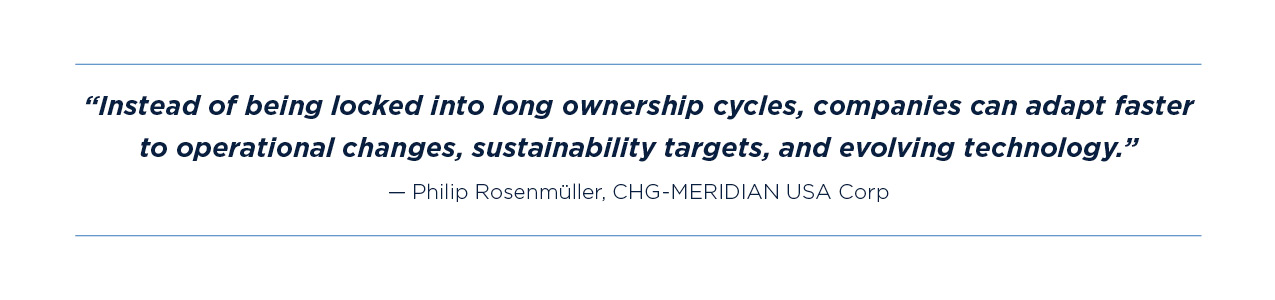
“Instead of being locked into long ownership cycles, companies can adapt faster to operational changes, sustainability targets, and evolving technology,” says Rosenmüller.
“As a result, leasing and lifecycle-based financing have moved from being alternatives to becoming the preferred strategy for many forward-thinking organisations in the materials handling industry.”
An organisation that operates in 32 countries – and is able, through its subsidiaries and partners, to support clients in nearly 190 countries – CHG-MERIDIAN provides FMV leasing solutions directly to its clients.
The company’s team of industry experts works closely with clients to analyse existing fleets and design TCO-based strategies that reduce costs, minimise downtime, and improve sourcing processes in the long-term.
 Tax benefits in the US
First Financial Equipment Leasing (FFEL), a US-based organisation focused on helping businesses in the materials handling sector and elsewhere match the best leasing options with the latest technologies, also sings the praises of FMV leases.
According to Elise Hardy, the company’s regional vice president sales, “their popularity stems from the combination of flexibility, tax efficiency, and cash flow advantages” they deliver.
Ensuring lower monthly payments compared to ownership-based financing, and allowing customers to return, renew, or purchase equipment at fair market value, FMV leases are ideal for rapidly evolving technologies, such as automation and robotics.
Hardy says that in the US, which is the market in which FFEL does all its business, changes to Section 179 tax benefits have significantly influenced financing strategies.
Specifically, for 2025, the deduction limit increased to USD2.5 million, with a spending cap of USD4 million. According to Hardy, this change allows businesses to deduct the full purchase price of qualifying equipment – new or used – provided it is placed in service by December 31, 2025.
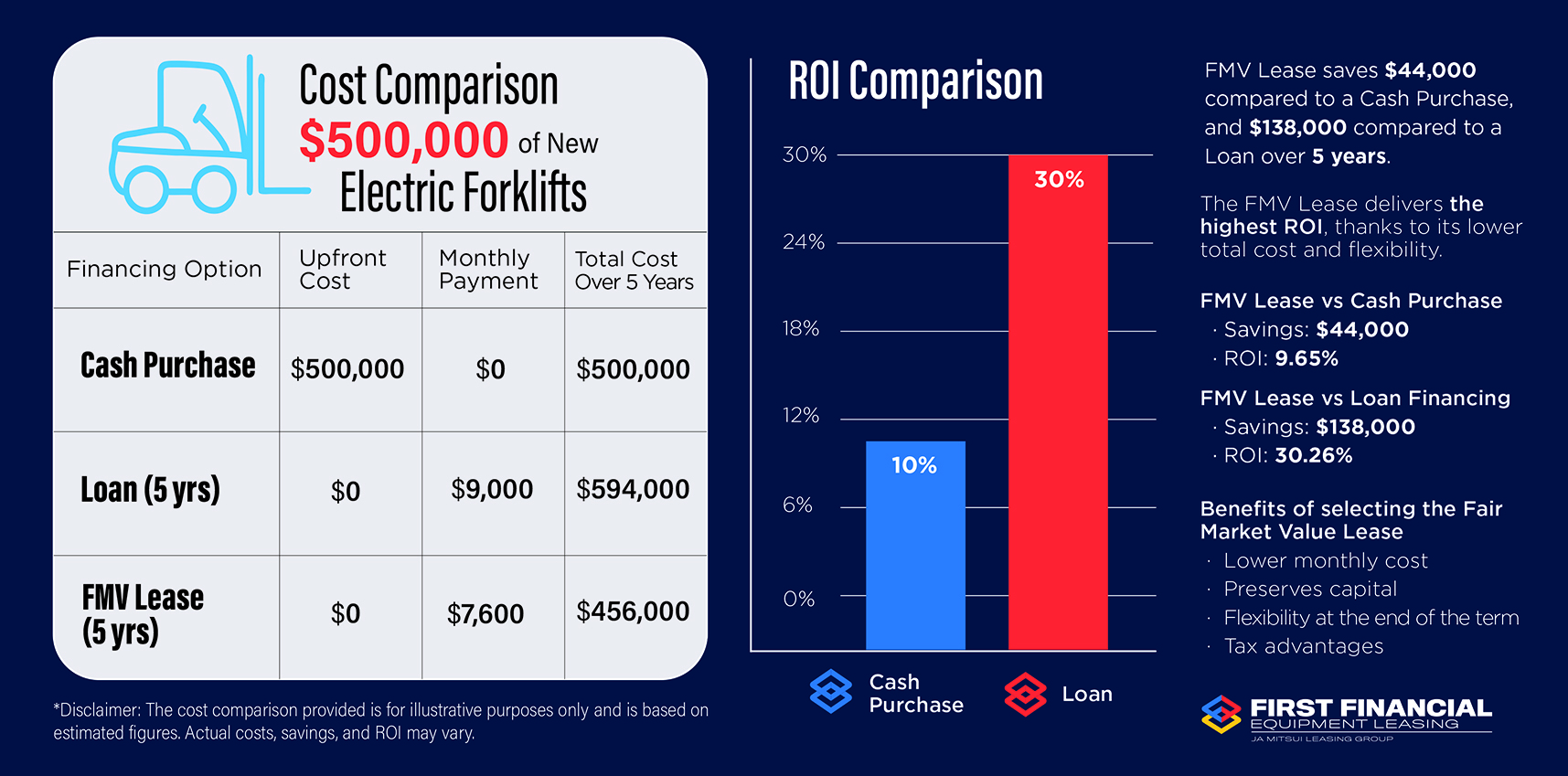
In addition, the restoration of 100% bonus depreciation means that companies can deduct any remaining equipment costs not covered by Section 179 in the same year.
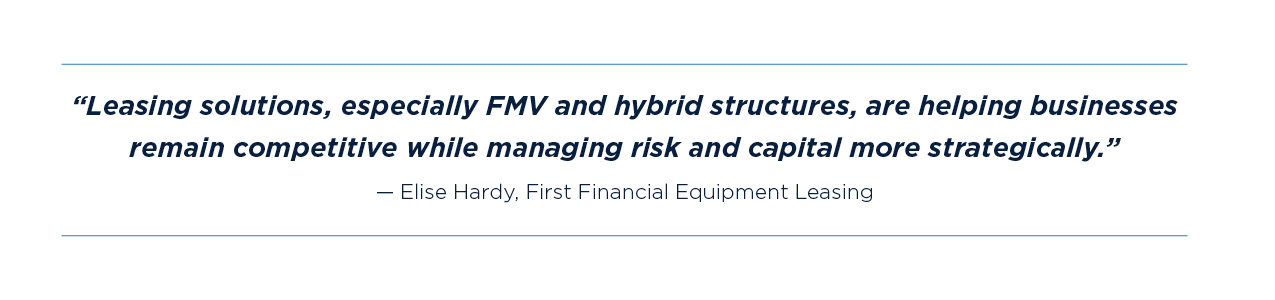
“This evolution reflects how customers now prioritise productivity, scalability, and financial agility over traditional ownership,” says Hardy. “Leasing solutions, especially FMV and hybrid structures, are helping businesses remain competitive while managing risk and capital more strategically.”
According to Hardy, the FMV leasing model is designed to support businesses not just for their current needs but also to help them grow and adapt in a fast-changing market.
“Unlike traditional loans or fixed leases, this approach offers more flexibility, making it easier for companies to take advantage of new technologies. This flexibility is crucial in today’s supply chain, which is constantly changing and evolving,” she says.
As a result, businesses are able to scale their operational capacity up or down based on market demand, allowing for better resource allocation and responsiveness to business fluctuations.
In addition, they can implement automation solutions at a manageable pace, ensuring that their workforce can adapt without disruption while enhancing efficiency and productivity. By avoiding large upfront capital expenditures, they can free up valuable financial resources and therefore enable funds to be used for other strategic initiatives or investments.
And they can also be sure to access the latest technology. FMV leases allow businesses to stay ahead of the curve by obtaining cutting-edge technology without the risk of obsolescence, ensuring that their operations remain competitive and innovative.
 SMEs and capital investment
While, traditionally, investment in the latest materials handling equipment has been dominated by large organisations with established automation teams and the requisite capital to fund full-scale projects, that is no longer always the case.
“We’re seeing far greater activity from small and medium-sized enterprises (SMEs), particularly those looking to improve efficiency and reliability without taking on heavy capital costs,” says Dr Paul Rivers, managing director of Guidance Automation.
“For SMEs, the case for better materials handling has always been clear – it directly affects productivity, flow, and customer delivery times. But the entry point was often too high.”
In other words, conventional purchase or lease models have always demanded significant upfront investment, long payback periods, and external integration support. Combined, these barriers have prevented many smaller manufacturers and distributors from modernising their handling operations.
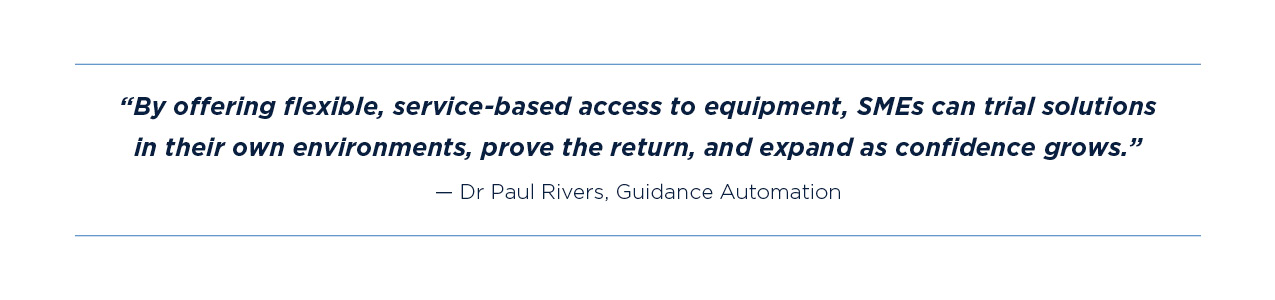
“Our goal, [at Guidance Automation], is to make advanced materials handling capability accessible to businesses of every size,” says Rivers. “By offering flexible, service-based access to equipment, SMEs can trial solutions in their own environments, prove the return, and expand as confidence grows.”
Rivers says he is impressed by how effectively these companies adopt new technologies once the barriers are removed.
“Smaller firms tend to make decisions quickly, involve the right people on the shop floor, and measure results closely,” he says. “Working in partnership with them means we share the risk and the reward – delivering measurable improvements in throughput, safety and utilisation without the burden of traditional capital expenditure.”
Guidance Automation’s most popular investment solution is Autonomous GO, a flexible, pay-as-you-go automation model for materials handling and transport that removes the need for capital investment or long-term commitment.
Customers who sign up for this solution pay only for the hours their robot workers operate – at half the UK Living Wage – with installation, servicing and support fully included. A straightforward operating-expense approach, it involves monthly invoicing, as well as the option to give just 30 days’ notice, without penalty, if the product in question is not the right fit.
According to Rivers, Autonomous GO delivers ROI within just one hour.
“[Up to] 30–50% of a production worker’s time is typically spent moving materials rather than applying the specialist skills they’re trained for,” he explains. “Automating that movement allows human workers to focus on work that genuinely requires their expertise.”
Because Autonomous GO is fully managed and performance-based, customers don’t carry the risk of ownership or maintenance. A practical alternative to traditional ownership or leasing models that align investment directly with productivity, it delivers predictable costs, measurable results and the flexibility to scale or pause as required.
Like the various other options mentioned above, Autonomous GO places materials handling operations of all sizes and persuasions in a position to navigate current global uncertainties and reap the benefits that investment in the latest capital equipment can deliver.
*** Click to view on Forklift Action website ***Hello, world
In the fast-evolving world of material handling, every second counts, and agility can spell the difference between success and stagnation. How businesses secure and manage their equipment plays a pivotal role in shaping their financial outcomes.
Today’s warehouses and distribution centers are far from just storage areas; they’ve transformed into lively hubs powered by automation, robotics, and cutting-edge AI technologies. These innovations are crucial for meeting the increasing demands of consumers and navigating the complexities of modern supply chains.
Yet, with innovation comes a hefty price tag. Advanced equipment, such as Automated Storage and Retrieval Systems (ASRS) and Automated Guided Vehicles (AGVs), as well as efficient lithium-ion battery fleets, can require investments that reach into the hundreds of thousands, if not millions, of dollars. For businesses aiming to stay ahead of the competition, the challenge extends beyond selecting the right equipment; it’s about navigating the most effective financing strategies.
Enter leasing: a game-changer for companies eager for flexibility, cost efficiency, and future-proofing their operations. Among the various leasing options, Fair Market Value (FMV) leases shine as a savvy way to acquire essential material handling equipment without tying up valuable capital or risking technological obsolescence.
Whether you’re a warehouse manager looking to ramp up operations, a fleet manager aiming for optimal utilization, or a dealer wanting to enhance the value you provide to customers, embracing flexible equipment leasing isn’t just a nice-to-have—it’s a critical component of a successful strategy.
The material handling equipment market is experiencing remarkable growth, with compelling statistics to support it. In 2023, a striking 82% of businesses acquiring equipment opted for some form of financing, with leasing emerging as the preferred choice for 26% of them.
By 2024, the U.S. material handling equipment leasing market surged to an impressive $1.15 billion, and it’s projected to maintain a robust 15.2% CAGR through 2034. On a global scale, the material handling equipment market is projected to reach a substantial $242.5 billion by 2025, driven by increasing demand across key sectors, including automotive, logistics, and e-commerce.
These figures underscore a pivotal truth: traditional ownership models are struggling to keep pace with rapid technological advancements and rising costs. Leasing presents a dynamic solution that aligns seamlessly with the priorities of modern businesses.
Far from being a mere fallback option, leasing has evolved into a strategic financial instrument. While owning equipment may appear appealing at first glance, it often ties up precious capital and exposes businesses to the risks of depreciation and maintenance. In contrast, leasing transforms this equation: it safeguards cash flow, facilitates effortless upgrades, and transfers the burden of obsolescence to the lessor.
For companies navigating fast-changing landscapes, leasing transcends mere affordability; it embodies agility and positions them for sustained growth. Embracing this flexible approach enables businesses to remain at the forefront of innovation, ensuring they are always ready for what lies ahead.
Leasing aligns perfectly with today’s business trends. Equipment financing is no longer just about acquiring assets; it also supports growth, agility, and resilience. Leasing turns equipment procurement into a strategic tool that aligns with overall business objectives.
In light of market volatility, potential rising interest rates, and tighter budgets, having predictable costs and preserving liquidity are essential. The rapid advancement of technology in robotics and AI requires flexibility, and leasing allows businesses to adopt cutting-edge solutions without being tied to outdated assets.
Labor shortages and rising wages are pushing companies to adopt automation more quickly, and leasing facilitates the deployment of advanced equipment without a significant upfront investment. Additionally, digital transformation is a major driver—technologies such as IoT, telematics, and AI analytics are becoming the standard, and leasing provides access to connected equipment without the long-term ownership risk.
In uncertain economic conditions, leasing helps to minimize exposure to depreciation and unexpected maintenance costs, resulting in greater financial predictability. Furthermore, global supply chain volatility and increasing customer experience demands necessitate agility, and leasing offers the flexibility to quickly scale operations in response to changing demand.
Leasing has become a strategic enabler that drives growth and resilience. By opting for leasing instead of ownership, organizations unlock advantages that have a direct impact on their bottom line.
First, leasing helps conserve financial resources, allowing businesses to redirect capital toward innovation and market expansion. It also provides access to cutting-edge technology without the burden of long-term commitments, ensuring that companies remain competitive in a rapidly evolving market.
Additionally, predictable monthly payments facilitate budgeting and improve cash flow management. Built-in maintenance and upgrade options help mitigate risks associated with equipment failure or obsolescence. In summary, leasing transforms the acquisition of equipment into a strategic decision that supports operational efficiency and long-term success.
Modern leasing solutions are designed to meet the unique needs of every stakeholder. Manufacturers benefit from OEM financing programs that enhance competitiveness. Dealers leverage flexible lease structures to close more deals and build lasting relationships. Warehouse managers gain access to bundled services, including maintenance and telematics, which simplifies operations. For business owners and CFOs, leasing represents a financial strategy that promotes flexibility and aligns with modern priorities.
Fair Market Value (FMV) leases stand out as the most strategic option for businesses navigating rapid technological change. They offer lower monthly payments compared to ownership or capital leases, freeing up working capital for growth initiatives. At the end of the term, businesses can return, renew, or upgrade equipment, which is ideal for environments where robotics and automation evolve quickly.
FMV leases also deliver tax efficiency, often qualifying as operating expenses. This structure simplifies accounting and supports predictable budgeting. For companies investing in automation, robotics, and AI-driven systems, FMV leases provide the agility and scalability needed to stay ahead without overcommitting resources.
Visit our FMV Leasing page for comprehensive details on how these leases can benefit your business by providing the necessary equipment without exceeding your budget.
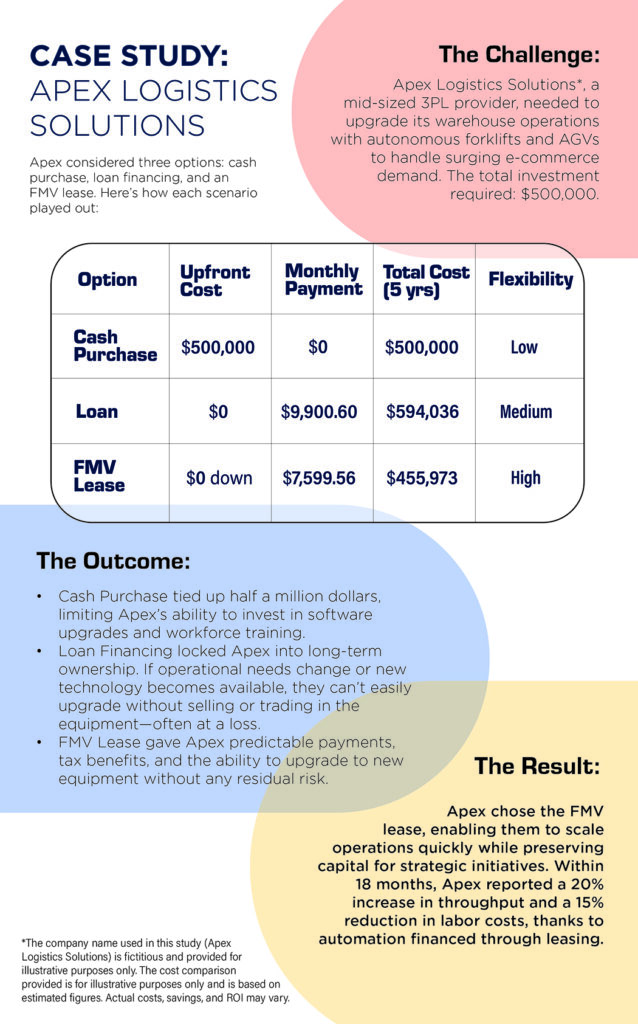
In a world where technology changes overnight, ownership can be a liability. Opting for leasing, primarily through FMV structures, offers flexibility, cost efficiency, and strategic advantage.
Leasing material handling equipment is more than a wise financial choice; it’s a comprehensive approach that can transform operations, enhance agility, and contribute to overall business success in a rapidly paced and demanding environment. As the industry continues to evolve, those who adopt adaptable financing solutions will differentiate themselves, positioning their businesses for sustainable growth and resilience in the face of future challenges.
Partner with a financing provider that understands your industry and can help you stay ahead of the curve. The right leasing strategy isn’t just about acquiring equipment; it’s about building resilience, agility, and long-term profitability. Contact us today to learn how we can help you transform your operations with smart, flexible financing.
*** Click to view on Forklift Action website ***Hello, world

Many professionals in the construction industry face a common dilemma: securing a significant project only to be halted by financial constraints. Rising equipment costs, extended payment terms stretching between 60-75 days, and the burden of covering two months’ expenses before receiving payment can create a daunting scenario.
Research from recent industry reports shows that:
· A significant 51% of construction professionals view upfront costs as their top challenge.
· 38% express frustration over slow payment processing, which disrupts cash flow and creates uncertainty.
· A concerning 56% have chosen to forgo projects entirely due to concerns over cash flow, demonstrating the significant impact on business opportunities.
· Additionally, it’s worth noting that 76% of projects experience at least a week’s delay due to payment issues, resulting not only in time loss but also in revenue loss, which can affect a company’s bottom line.z
One of the main factors contributing to these cash flow challenges is the reluctance of traditional banks to extend credit to subcontractors unless they are large, established firms. This can put smaller companies at a disadvantage, often forcing them to start projects with a limited workforce due to tight cash controls, which can disrupt timelines and potentially jeopardize job security.
Leasing equipment can be a strategic approach to managing cash flow effectively. Here’s how it can be beneficial:
1. Lower Upfront Costs:
Leasing significantly reduces the immediate financial burden by spreading payments over time. This flexibility allows you to allocate funds more effectively toward labor and materials, enabling projects to kick off smoothly.
2. Improved Cash Flow:
With predictable monthly leasing payments, budgeting becomes easier, reducing the pressure of waiting for payments from clients. Businesses no longer have to cover two months of expenses out of pocket.
3. Reduced Risk:
Leasing helps maintain operational continuity even when clients extend their payment terms. This reduces reliance on credit and emergency funds, allowing you to manage your finances with greater ease.
4. Enhanced Competitiveness:
Accessing the latest equipment without the weight of long-term debt empowers your business to confidently bid on more projects.
A mid-sized contractor in the Midwest faced a frustrating reality: despite winning bids for lucrative commercial projects, they couldn’t move forward. Why? Upfront equipment costs were draining their working capital, leaving them unable to fully staff jobs or purchase necessary materials.
The result was stalled timelines, missed opportunities, and mounting stress. Traditional financing wasn’t an option—banks were hesitant to extend credit without significant collateral.
That’s when they turned to equipment leasing. By spreading costs over manageable monthly payments, they unlocked $250,000 in working capital almost immediately. This financial breathing room allowed them to:
✔ Fully staff projects from day one
✔ Maintain cash flow without relying on emergency credit
✔ Take on three additional projects within the same year
The outcome? An 18% increase in annual revenue, stronger client relationships, and a competitive edge in bidding for future work—all without sacrificing financial stability.
Don’t allow financial challenges to prevent you from pursuing new project opportunities. By adopting a strategic leasing approach, you can turn what once seemed impossible into real achievements, paving the way for significant growth.
If you’re ready to utilize equipment leasing to advance your business, let’s connect. Together, we can explore opportunities that will drive your success.
For more information, contact our construction industry expert, Jeff Whitcomb, at 630-853-1991, jwhitcomb@ffequipmentleasing.com.Hello, world
The passage of the One Big Beautiful Bill has transformed the landscape for equipment financing, offering businesses up to $2.5 million in immediate tax deductions. Whether you’re a contractor, construction firm, or any business relying on heavy equipment or software, this is your moment to invest in growth while preserving capital.
Our Section 179 Playbook breaks down everything you need to know—from how leasing can maximize your tax benefits to real-life case studies showing how companies saved hundreds of thousands of dollars. It’s packed with actionable insights, objection-handling talk tracks, and strategies to help your sales team close more deals before the December 31, 2025 deadline.
Download the playbook now and empower your team to turn tax incentives into business wins.

Hello, world