>> Link to 2023 Monitor 100 – Monitordaily issue <<


>> Link to download PDF <<

Hello, world


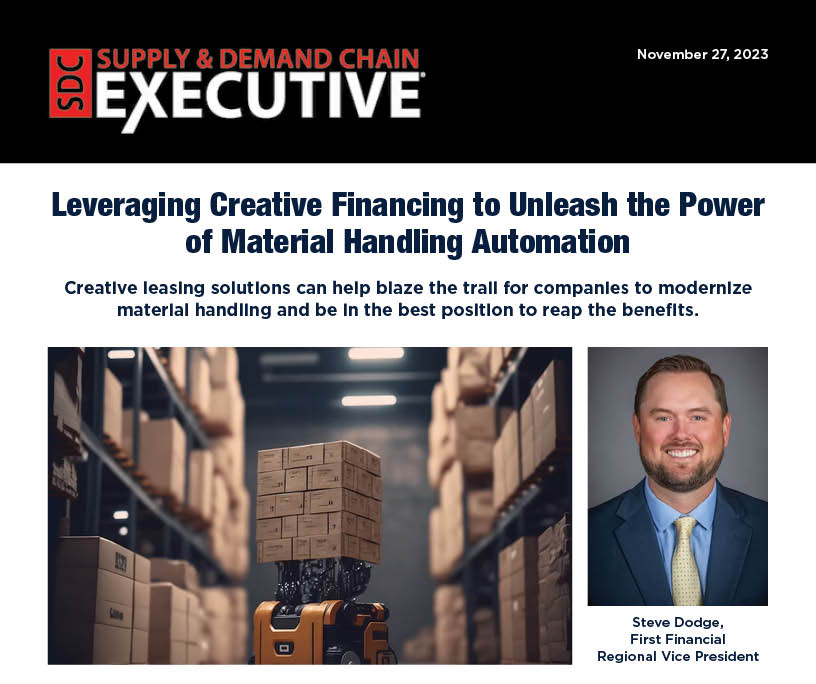
*** Click to download the SDC Supply & Demand Chain Executive article. ***

Click to download the SDC Supply & Demand Chain Executive article.

Hello, world


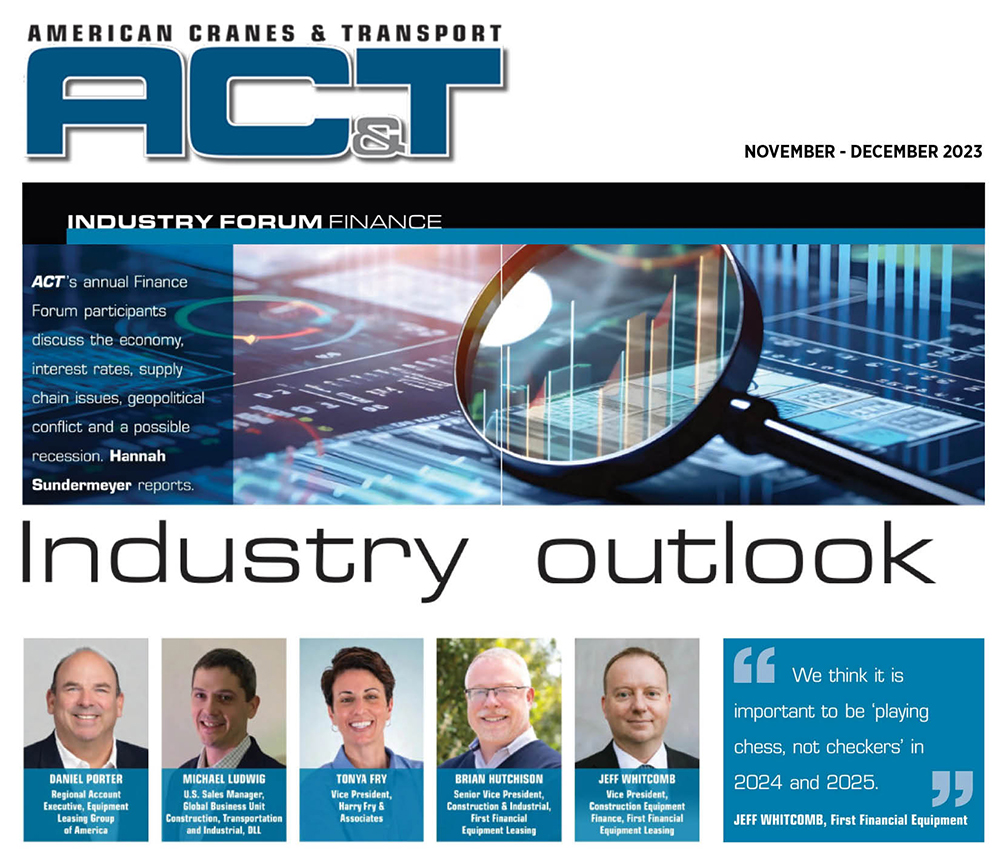
*** Click to download the Industry Outlook: AC&T Magazine article. ***

Click to download the Industry Outlook: AC&T Magazine November-December 2023 article.

Hello, world


>> Link to October 2023 Material Handling Wholesaler Magazine <<

 Hello, world


Our ambitious foray into clean technology and its pursuit of net-zero targets have taken center stage, echoing through Canadian government and corporate corridors alike. In a defining move, the Canadian government, in March 2023, unveiled a suite of investment tax credits (ITCs) aimed at accelerating the nation’s decarbonization drive, with the goal of achieving a net-zero emissions status by 2050.

Budgets & Boons

With the 2023 Federal Budget, eligible Canadian clean technology projects are set to receive a 30 percent refundable tax credit, a financial boon that stands poised to reshape the landscape of sustainable innovation. This credit can be leveraged by taxable entities for investments in a gamut of clean technologies and materials. The ITC covers a wide range of zero-emission technologies. While legislative details are still being fine-tuned, all investments in eligible technologies, initiated from the Budget’s proclamation on March 28, 2023, stand eligible for the ITC. The credit, however, is slated for a gradual phasing-out process, with rates reducing to 15 percent in 2034 and eventually tapering off to zero.

The Clean Technology Tax Credit holds tremendous promise, transforming up to now cost-prohibitive sustainable projects into financially viable ventures, and paving the way for clean tech projects to become cash-flow positive right from their inception. In essence, the financial outlay for these projects becomes offset by the expected energy savings or revenue generated.

For these ventures to succeed, creative financing proves crucial. It demands financial institutions that have a deep understanding of the industry’s nuances, capable of crafting flexible structures that minimize finance payments and maximize the potential for projects to become cash-flow positive.

US and Canada

Interestingly, Canada’s ITC framework bears a striking similarity to its American counterpart, which gives a sense of comfort to would-be American lenders that are already acquainted with the structure and intricacies of the system. The biggest difference is that in Canada, the ITC is refundable, meaning recipients receive the full amount regardless of how much income tax they pay. This allows more recipients to take advantage of the credit and also removes many administrative and operational hurdles for the lender. An example is the need to find a third-party tax equity partner that has a big enough tax liability to leverage the ITC.

One example of how lenders can use structure to align with current demand is to structure a lump-sum payment, equal to the ITC in year one. Timing would depend on when the ITC is expected to be received, with the borrower using their ITC to make the lump-sum payment. Credit can get more comfortable with a rapid reduction in overall exposure, and the lump-sum payment will reduce all other payments, allowing the project a better chance of being cash-flow positive.

For many smaller clean tech projects, if a customer has borderline credit quality, or more importantly, if the finance amount is right up against their exposure limits, that rapid reduction in exposure can often be a make-or-break change in terms of credit approval.

Tempered Enthusiasm

Yet, in the excitement that surrounds environmental, social, and governance (ESG) goals, these projects and investments need to make sense financially – for all stakeholders. While some lenders are enthusiastically expanding their cleantech lending portfolio to bolster their ESG credentials, others have reservations as they consider the underlying asset collateral to be weak, (i.e., on solar projects where the resale value of the panels is not strong). These lenders often still view renewable energy and clean technology as an emerging industry in Canada and are approaching this economic upswing with caution.

It’s imperative that the finance industry embrace the clean energy economic boom, utilize flexible structuring to incorporate the ITC’s and align their lending products to allow more projects to move forward. Canada needs companies to embrace the Clean Technology Tax Credit, but to do this, we need lending partners that can be resourceful, flexible, and move quickly to meet this marketplace need to bring these projects to fruition.

About the Author

Grant MacFarlane is Regional Vice President at First Financial Canadian Leasing, a JA Mitsui Leasing, Ltd. company that is very active in lending and structured finance for the renewable energy sector.


>> Link to Canadian Finance News article <<Hello, world


Creative financing can be a game-changer to accelerate return on investments from sustainable projects

by Grant MacFarlane


Investments in clean technology and net zero targets are being mandated across the board, at every level of government in Canada as well as within corporations. In March 2023, the Canadian government announced several major investment tax credits (ITCs) with the goal of accelerating decarbonization in Canada to meet its net-zero emissions goal by 2050.

Under the 2023 Federal Budget, eligible Canadian clean technology projects will receive a 30 percent refundable tax credit that taxable entities can be leveraged for eligible investments in clean technologies and materials. The ITC covers a wide range of zero-emission technologies. While legislation is still being finalized, in the interim, all investments in applicable technologies from the date of the Budget – March 28, 2023 onward – are eligible for the ITC. The credit will be phased out after 2034, with the credit rate reduced to 15 percent for 2034 and zero percent thereafter.

The Clean Technology Tax Credit holds tremendous promise to help accelerate the rollout of sustainable projects that previously may have been viewed as cost prohibitive. The ITC significantly improves project economics and allows more clean tech projects to become cash flow positive from day one, meaning the finance payments are less than the expected energy savings or revenue associated with the project.

Many clean technology vendors are focusing on this “cash-flow positive” model to go to market and increase their sales. Creative financing can provide a very strategic onramp, as these projects absolutely require flexible financing solutions to move forward. It also requires a lender that is knowledgeable about the industry and can offer flexible structures to achieve the lowest possible finance payments to allow more of these projects to become cash-flow positive.

Since Canada’s ITCs are very similar to those used in the US, many American lenders are more comfortable with the structure and how to navigate the unique challenges. The biggest difference is that in Canada, the ITC is refundable, meaning recipients receive the full amount regardless of how much income tax they pay. This allows more recipients to take advantage of the credit and also removes many administrative and operational hurdles from a lending perspective, such as the need to find a third-party tax equity partner that has a big enough tax liability to leverage the ITC.

One example of how lenders can use structure to align with current demand is to structure a lump-sum payment, equal to the ITC in year one. Timing would depend on when the ITC is expected to be received, with the borrower using their ITC to make the lump-sum payment. Credit can get more comfortable with a rapid reduction in overall exposure, and the lump-sum payment will reduce all other payments, allowing the project a better chance of being cash-flow positive.

For many smaller clean tech projects, if a customer has borderline credit quality, or more importantly, if the finance amount is right up against their exposure limits, that rapid reduction in exposure can often be a make-or-break change in terms of credit approval.

While it seems every corporation touts the importance of ESG goals, at the end of the day, these projects and investments need to make sense financially – for all stakeholders. We are noticing that while some lenders are starting to really lean into increasing their ESG goals by growing their clean tech lending portfolio, some still aren’t entirely comfortable with lending for many projects as they consider the underlying asset collateral to be weak, i.e., on solar projects where the re-sale value of the panels is not strong. These lenders often still view renewable energy and clean technology as an emerging industry in Canada and are approaching this economic upswing with caution.

It’s imperative that the finance industry embrace the clean energy economic boom, utilize flexible structuring to incorporate the ITC’s and align their lending products to allow more projects to move forward. Canada needs companies to embrace the Clean Technology Tax Credit, but to do this, we need lending partners that can be resourceful, flexible, and move quickly to meet this marketplace need to bring these projects to fruition.


Grant MacFarlane is Regional Vice President at First Financial Canadian Leasing, a JA Mitsui Leasing, Ltd. company that is very active in lending and structured finance for the renewable energy sector.


>>Link to Total Finance article <<Hello, world


*** Click to download the MDM September 19, 2023 Finance article. ***

Click to download the MDM September 19, 2023 Finance article.Hello, world


First Financial Equipment Leasing ranked at #20, with two-year revenue growth of 74.3%.


>> Link to OCBJ article <<

Hello, world


Monitor | 40 Under 40 NextGen Issue: May/June 2023

Featuring Audrey Kent


Click here to view or download article.

Click here to view Monitor e-magazine.


Hello, world


American Cranes and Transport (AC&T)

By Hannah Sundermeyer

> LINK TO ARTICLE ON AC&T WEBSITE <

Three experts discuss market indicators – interest rates, inflation and the possibility of a recession.

Heavy equipment and construction markets are in a unique position. The United States is facing the possibility of a looming recession, while on the flip side, the country is seeing a boom in infrastructure projects following the enactment of President Biden’s Bipartisan Infrastructure Law. With money to spend in the new and used equipment realm, the industry is faced with economic risks and rewards, on both sides of the coin.

ACT reached out to three finance experts to learn more about their thoughts and perspectives on the current market, interest rates, inflation and much more. Panelists for our forum include Jeff Whitcomb, construction industry lead, First Financial Equipment Leasing; Tonya Fry, an owner and vice president, Harry Fry & Associates; and Jay Buechler, senior account manager of construction finance, DLL.


According to the consultant firm Off-Highway Research, North America was the best performing of the major construction equipment markets last year. How do you characterize the market for new and used cranes?

WHITCOMB: We don’t see it slowing in 2023 or 2024. While it may be that personal consumption drags down GDP, we see both private domestic investment as well as government domestic investment continued strength, and for that reason, we see continued strength in the new and used crane market.

FRY: I would currently characterize the market as cautious. I am continuing to hear from my customers that they have more work than they can service. We are constantly barraged with news of a possible recession, continued record high inflation and interest rate hikes, plus international issues. When this is combined with lack of supply of equipment and delivery delays, of course customers are going to be cautious.

However, I find that many customers are trying not to pay attention to the news, but instead considering what is happening in their geographic market. If they have demand for work or are awarded jobs, they are willing to make the crane purchase as they don’t want to lose the work/jobs. As far as new and used cranes go, if customers are in need of equipment, they will purchase what they can get their hands on. As a result, we have definitely seen prices of equipment significantly increase. I do feel if you are in a market to sell, and have quality, used equipment, you are in a good position.

BUECHLER: Despite the potential for a recession in late 2023, the market remains robust in North America for both new and used cranes, as significant project work continues to require cranes to complete these projects. The supply chain disruptions of the last several years has led to a restricted supply of new cranes, with many new crane models not being available until well into 2024. This has led to a very competitive and aggressive market for used cranes, resulting in increased used crane pricing.


Economists are predicting a recession in 2023. How Do you anticipate this will impact the sales of new and used cranes?

WHITCOMB: We do not think that the recession will have much of an impact on crane sales, both new and used. We think that it will be a consumer recession, and that the commercial activity that has been planned for all this infrastructure work will be in full swing, and that is going to drive strong demand for 2023 to 2025.

FRY: I feel like economists have been predicting a recession since 2021. In addition, the economists have had contradicting opinions on a recession for the past year. As noted above, I think people are trying to pay attention to what is going on in their market area rather than listen to the news. There is still a demand for quality equipment, and I think it is the lack of inventory that is slowing sales.

BUECHLER: Given the short supply of new cranes and equipment and long lead times on some models, we anticipate that new crane sales, as well as used crane sales, will remain brisk and aggressively priced.


To try to control inflation, the Fed has continually raised interest rates over the past year. How have higher interest rates impacted crane financing?

WHITCOMB: Well, 5 percent may be the target Fed funds rate, but we see actual real interest rates much higher. This was somewhat offset by lending at the regional bank level where deposits sometimes hold down interest rates. With the recent banking crisis, we’ve seen a massive pullback by small and regional banks, as depositors have fled those banks. Unfortunately for the retail marketplace, it seems that the big will get bigger and the small will continue to fight to survive.

FRY: When the Fed initially began raising rates, I think it was sticker shock for many. For almost a decade, we had prime rates at historic lows. Customers were used to rates in the threes and sometimes twos.

When I began my career in crane financing in 2004, interest rates were in the 7 to 8 percent range, and this was the normal range. When my parents started the company in the 1990s, rates were 10.5 to 12 percent. We often say that a business that started within the past ten years doesn’t know anything other than extremely low rates. It seems that these businesses were more affected/surprised by the cost of financing than the older, established companies. It has taken a bit for customers to understand, but due to the lack of supply, if they needed the equipment, they accepted what the interest rate would be. By Q4 2022, the sticker shock had worn off and most understood that these rates were here to stay. I think it helped our company had a strong fourth quarter in 2022 because customers didn’t want to risk rates going up, so they would make the purchase. We understand higher rates are a real money cost to a business but not acquiring equipment because the rates are high impacts the business even more by lost revenues. The decision to acquire equipment is always difficult but is typically made for future long-term benefits.

BUECHLER: Increased interest rates are combining with rising new and used crane prices to drive up financing payments for entities seeking to finance their crane acquisitions. This is causing crane customers to look long and hard at the economics between where their financing payments are going and what crane rental rates they are able to extract from the market. If the economics no longer makes sense, we would not be surprised to see some crane rental companies back away from new equipment purchases.


On the flip side, new infrastructure projects are coming online with federal and local monies being pumped into the market. Does this mean new cranes and related equipment will be needed?

WHITCOMB: Absolutely, yes.

FRY: Equipment will definitely be needed, but as is the common theme, the lack of supply is having quite an impact on this. Companies may pay a premium on available equipment as they would not want to risk losing a job.

BUECHLER: New infrastructure projects will definitely continue to require crane utilization. The crane rental companies that will be best positioned for gaining work on these projects will be those that currently have a large installed base of cranes available to work on these projects, such that they are not reliant on the availability of new equipment to service their project work.


What are the biggest challenges/issues in financing equipment in today’s market?

WHITCOMB: 2024 will be the biggest year of federal disbursements on record for capital investment. For this reason, we see continued strength and continued demand for crane and lift equipment.

FRY: I think the biggest challenge in financing right now is that credit is beginning to tighten a bit. Lenders are still lending and buying deals. However, we are finding that they are asking more questions. They want more details on why the equipment is needed and projections for additional work in 2023 and beyond. Lenders are definitely still buying deals. With the constant threat of a recession, they are digging a little deeper into deals, and the credit box is just a bit tighter. I would say that customers just need to be patient when asked for additional info.

BUECHLER: The biggest challenge we see currently in the crane financing market, with increased crane prices and increased interest rates already mentioned, is trying to provide a financial solution that results in a payment that makes economic sense for the customer given the rental rates they are able to charge in the market.


> LINK TO ARTICLE ON AC&T WEBSITE <Hello, world